Introduction
The foreign exchange market, commonly known as the forex market, is the largest financial market in the world. Every day, trillions of dollars are exchanged between governments, financial institutions, corporations, and individual traders.
Unlike traditional stock markets, the forex market operates 24 hours a day and connects financial centers across the globe. It allows currencies to be traded internationally, enabling countries to conduct trade, businesses to operate globally, and investors to profit from currency movements.
Understanding how the forex market works is essential for anyone interested in global finance, international trade, or currency markets.
What Is the Forex Market?
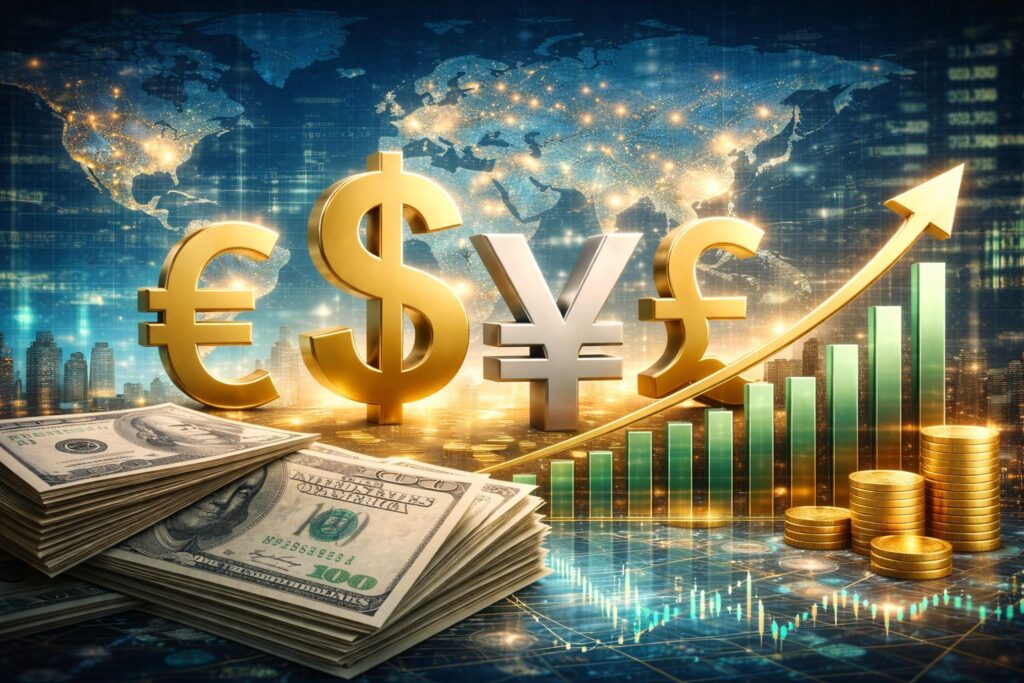
The forex market is a global decentralized marketplace where currencies are bought and sold. It determines exchange rates for nearly every currency in the world.
Currencies are traded in pairs because when one currency is bought, another is sold. For example, in the currency pair EUR/USD, the euro is traded against the US dollar.
The forex market allows individuals, companies, and governments to convert one currency into another for international trade and financial transactions.
The Size of the Forex Market
The forex market is considered the largest and most liquid financial market in the world. Daily trading volumes often exceed 6 trillion dollars, making it far larger than global stock markets.
Several factors contribute to the enormous size of the forex market:
- International trade
- Global investment flows
- Currency speculation
- Central bank operations
Because of its size, the forex market is extremely liquid, meaning currencies can be bought and sold quickly without significantly affecting prices.
Major Participants in the Forex Market
Several key players participate in the foreign exchange market.
Central Banks
Central banks play an important role in currency markets. They manage national currencies and may intervene in the forex market to stabilize exchange rates.
Commercial Banks
Large international banks conduct the majority of currency transactions. These banks facilitate currency exchanges for clients and participate in trading activities.
Corporations
Multinational companies use the forex market to convert currencies when conducting international business. For example, a company importing goods from another country must exchange its domestic currency for foreign currency.
Individual Traders
Individual investors also participate in forex trading through online trading platforms. Many traders speculate on currency price movements in hopes of generating profits.
How Currency Pairs Work
Currencies in the forex market are always traded in pairs. Each pair consists of two currencies: the base currency and the quote currency.
For example:
- EUR/USD
- USD/JPY
- GBP/USD
In the EUR/USD pair, the euro is the base currency and the US dollar is the quote currency.
If the price of EUR/USD rises, it means the euro has strengthened against the US dollar.
Understanding currency pairs is fundamental to forex trading and international finance.
Exchange Rates and Their Importance
Exchange rates represent the value of one currency relative to another. These rates constantly fluctuate due to changes in supply and demand.
Several factors influence exchange rates, including:
- Economic growth
- Inflation rates
- Interest rates
- Political stability
- Global market conditions
Businesses that operate internationally must monitor exchange rate fluctuations because they can affect profits and costs.
The Role of the US Dollar in Forex Markets
The US dollar plays a central role in the forex market. It is involved in a large percentage of global currency transactions.
Many currency pairs include the US dollar, such as:
- EUR/USD
- USD/JPY
- USD/CHF
Because the US dollar serves as the world’s primary reserve currency, its movements can influence global financial markets.
Why the Forex Market Operates 24 Hours a Day
Unlike stock exchanges, the forex market never closes during the business week. Trading begins in Asia and continues across different time zones around the world.
Major trading sessions include:
- Tokyo session
- London session
- New York session
As financial centers open and close, trading activity moves around the globe.
This continuous operation allows traders and financial institutions to react quickly to global economic events.
Risks and Opportunities in Forex Trading
The forex market offers many opportunities for traders and investors, but it also involves risks.
Currency prices can change rapidly due to economic data releases, geopolitical events, and market speculation.
Successful forex trading requires knowledge, discipline, and risk management strategies.
Many professional traders use technical analysis and economic indicators to predict currency movements.
The Future of the Forex Market
Technology is transforming the foreign exchange market. Online trading platforms, digital payments, and financial technology companies have made currency trading more accessible than ever.
In addition, central bank digital currencies and blockchain technology may influence how currencies are traded in the future.
Despite these innovations, the forex market will continue to play a crucial role in global finance and international trade.
Conclusion
The forex market is a vital component of the global financial system. It enables international trade, supports global investments, and facilitates currency exchange around the world.
With trillions of dollars traded every day, the forex market remains the largest financial marketplace on the planet.
Understanding how the forex market works helps individuals, businesses, and investors navigate the complexities of global finance and currency trading.
Leave a Reply